
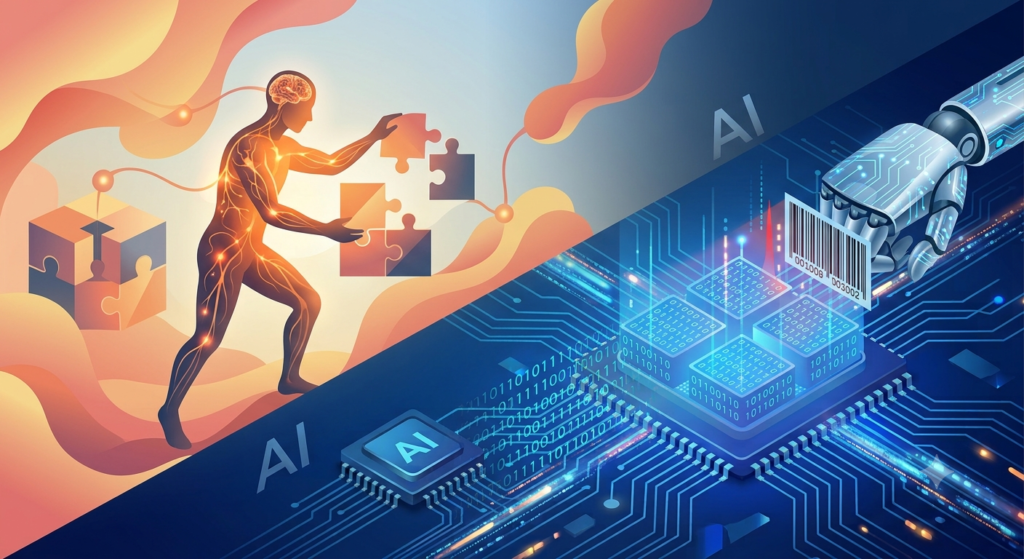
AI vs Human Intelligence: Artificial Intelligence (AI) is transforming industries, automating tasks, and reshaping the way people work and live. While AI has become increasingly powerful, it still differs significantly from human intelligence. Understanding these differences helps us appreciate both the capabilities and limitations of AI.
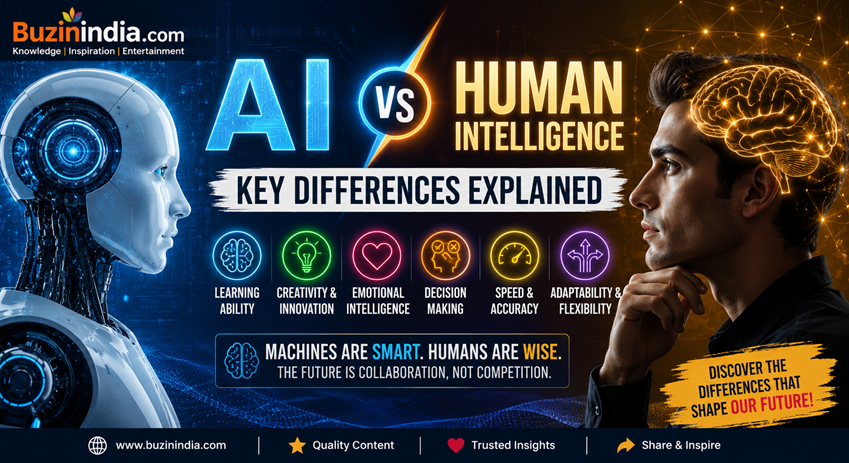
Table of Contents
What is Artificial Intelligence?
Artificial Intelligence refers to computer systems designed to perform tasks that typically require human intelligence. These tasks include learning from data, recognizing patterns, understanding language, solving problems, and making predictions. AI powers virtual assistants, chatbots, recommendation systems, self-driving technology, and healthcare diagnostics.
What is Human Intelligence?
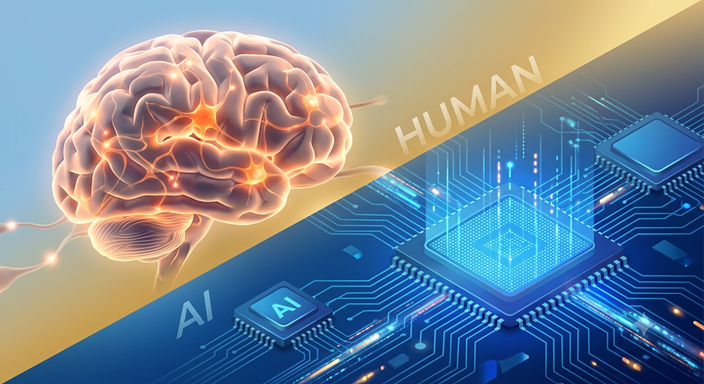
Human intelligence is the natural ability to think, reason, learn from experience, understand emotions, and make ethical decisions. Humans possess creativity, intuition, empathy, and adaptability, allowing them to solve complex problems even in unfamiliar situations.
AI vs Human Intelligence: 6 Key Differences
1. Learning Ability: AI learns by processing massive datasets and identifying patterns through algorithms. Humans learn through education, observation, emotions, and life experiences, enabling deeper understanding.
2. Creativity: AI can generate content, music, and artwork based on existing data. However, genuine innovation, imagination, and original thinking remain strengths of human intelligence.
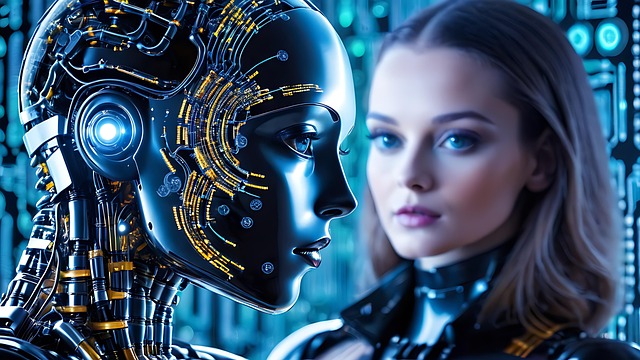
3. Emotional Intelligence: AI can recognize emotions using data analysis but cannot truly feel empathy, compassion, or emotional connections. Humans naturally understand feelings and social interactions.
4. Decision-Making: AI makes decisions based on data, statistical models, and predefined rules. Humans consider ethics, intuition, cultural values, and personal experiences while making decisions.
5. Speed and Accuracy: AI processes enormous volumes of information within seconds and performs repetitive tasks with remarkable accuracy. Humans are comparatively slower but excel in critical thinking and handling uncertainty.
6. Adaptability: Humans quickly adapt to unexpected situations with limited information. AI generally performs best within the scenarios it has been trained to handle.
Can AI Replace Human Intelligence?
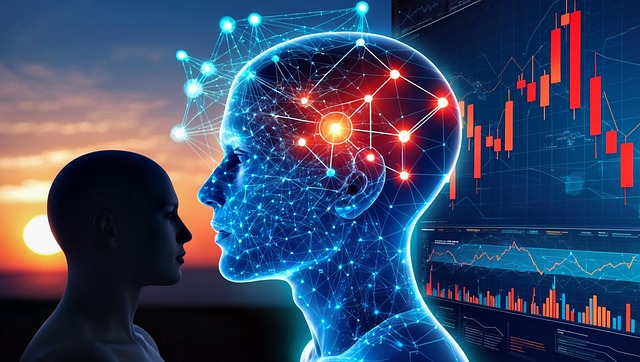
AI is unlikely to replace human intelligence completely. Instead, it complements human abilities by automating repetitive tasks, improving productivity, and assisting in complex data analysis. Human creativity, emotional understanding, ethical judgment, and leadership remain irreplaceable in many professions.
Future of AI vs Human Intelligence
The future lies in collaboration rather than competition. Businesses are increasingly adopting AI to support decision-making while relying on human expertise for innovation, strategic planning, and relationship management. Professionals who learn AI tools alongside critical thinking skills will enjoy greater career opportunities.
Conclusion
AI and human intelligence each have unique strengths. AI offers unmatched speed, efficiency, and data processing capabilities, while humans excel in creativity, empathy, adaptability, and ethical reasoning. The most successful future will be built through human-AI collaboration, where technology enhances human potential instead of replacing it.