
Emergency Fund Planning: Life is unpredictable. From sudden medical expenses to job loss or urgent home repairs, financial emergencies can strike anytime. This is where Emergency Fund Planning becomes a crucial pillar of smart money management. An emergency fund acts as a financial cushion, protecting you from debt and stress during tough times.
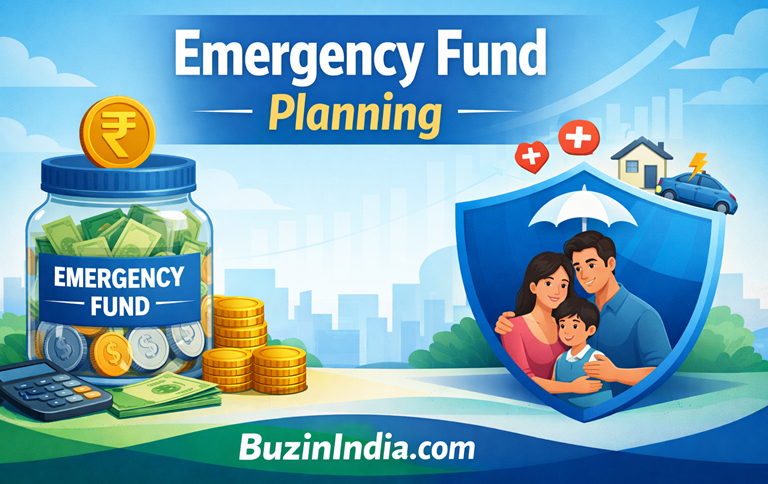
Table of Contents
🚨What Is an Emergency Fund Planning?
An emergency fund is a dedicated savings pool meant only for unexpected expenses. It helps you stay financially stable without relying on loans, credit cards, or borrowing from others.
✅Why Emergency Fund Planning Is Important
- 🛡️ Financial Security: Shields you from sudden income disruptions
- 😌 Peace of Mind: Reduces stress during uncertain situations
- 💳 Avoids Debt Traps: Prevents high-interest loans and credit card bills
- 📈 Supports Long-Term Goals: Keeps investments and savings untouched

💡How Much Emergency Fund Should You Have?
A common rule is to save 3 to 6 months of essential expenses, including:
- Rent or home loan
- Food and groceries
- Utilities and transportation
- Insurance premiums
If your income is irregular or you are self-employed, aim for 6–9 months of expenses for extra safety.
🧭 Steps to Build an Emergency Fund
- Assess Monthly Expenses: Calculate your essential monthly spending accurately.
- Set a Realistic Goal: Start small—₹5,000 or ₹10,000—and grow consistently.
- Open a Separate Account: Keep your emergency fund separate to avoid unnecessary spending.
- Automate Savings: Set up automatic transfers right after your salary is credited.
- Increase Gradually: Boost contributions when income rises or expenses reduce.

🏦Where Should You Keep Your Emergency Fund?
Choose options that are safe, liquid, and easily accessible, such as:
- Savings account
- Liquid mutual funds
- Short-term fixed deposits
Avoid locking emergency funds in long-term or high-risk investments.
❌Common Mistakes to Avoid
- Using emergency funds for shopping or travel
- Delaying savings due to “low income”
- Keeping funds in volatile investments
- Not replenishing after use

🌟Final Thoughts
Emergency Fund Planning is not a luxury—it’s a necessity. No matter your income level, starting early and staying consistent can protect you from financial shocks. A strong emergency fund empowers you to face life’s uncertainties with confidence and control.
👉 Start today, because financial peace begins with preparation.