
Indirect Tax Reform in India Hardcover CLICK HERE TO BUY NOW ON AMAZON
GST REFORM: India’s Goods and Services Tax (GST), introduced in 2017, marked a historic step toward creating a unified indirect tax system. Over the years, GST has evolved with multiple amendments to simplify compliance, boost transparency, and strengthen revenue collection. Now, the government is preparing for the New Next Gen GST Reform, a transformative step aimed at making the tax system more robust, digital, and business-friendly.

Table of Contents
What is the Next Gen GST Reform?
The Next Gen GST Reform is an upcoming framework that focuses on automation, AI-driven monitoring, and a simplified structure for taxpayers. The objective is to reduce complexity, minimize human intervention, and curb tax evasion while ensuring ease of doing business.
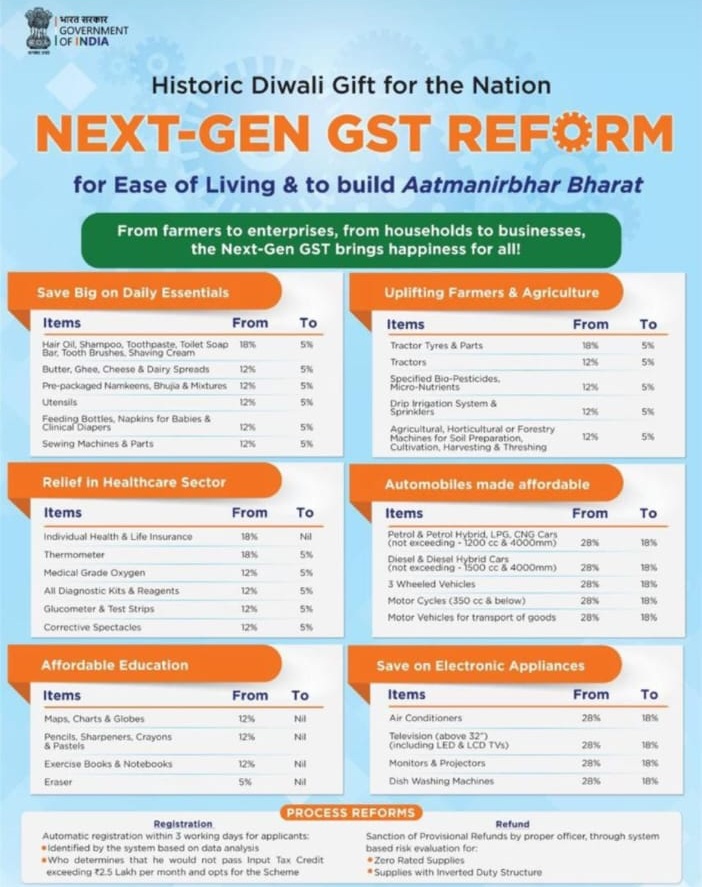
Key areas of reform include:
- Simplified Return Filing – Introduction of a single, user-friendly return form for all categories of taxpayers.
- AI & Data Analytics – Use of artificial intelligence to track fraudulent invoices and detect mismatches in real time.
- E-Invoicing Expansion – Mandatory e-invoicing for medium and small enterprises, making transactions more transparent.
- Rationalization of Tax Slabs – Efforts to merge some GST slabs to bring more clarity and stability.
- Better Input Tax Credit (ITC) System – Streamlined ITC claims with faster verification to improve cash flow for businesses.
Why is the GST REFORM Needed?

Despite its success, the current GST system has challenges such as multiple returns, compliance burden for SMEs, and tax disputes. The Next Gen GST Reform aims to:
- 🏢 Reduce compliance burden for businesses, especially small traders.
- 💻 Promote digital-first taxation with AI, blockchain, and real-time monitoring.
- 📊 Increase revenue efficiency by plugging loopholes and preventing fraud.
- 🌍 Align India with global best practices in taxation systems.
How Will It Benefit Businesses and Consumers?
- Businesses will save time and money with simpler filings, faster refunds, and reduced litigation.
- Startups & SMEs will get a fairer platform with reduced paperwork and lower compliance costs.
- Consumers may benefit in the long run through lower prices, as reduced tax evasion leads to stable rates.
Government’s Digital Push
The reform strongly emphasizes digitalization. With AI-driven dashboards, e-invoicing portals, and blockchain-based verification, India is moving towards a smarter tax system. This will not only simplify compliance but also build trust between taxpayers and the government.
Challenges Ahead
While the reforms are promising, implementation may face hurdles:
- Training and awareness for small traders.
- Upgrading IT infrastructure across rural areas.
- Balancing revenue collection with business ease.

Conclusion on GST REFORM
The New Next Gen GST Reform is a bold step toward a future-ready taxation system. By embracing digital innovation, simplifying structures, and ensuring transparency, the reform can transform India’s tax ecosystem into one of the most efficient in the world. As India prepares for this next phase, businesses must stay updated, adapt to new compliance rules, and leverage technology for seamless tax management.